
This section tells you what we mean by “unusual experiences” (UEs), what they are and how to manage them.
Introduction
Growing up can be tough. Your teenage years and early adulthood brings lots of changes; in your body, your thoughts and your relationships.
Sometimes young people have experiences that feel a bit unusual. This might include:
- hearing noises or voices
- seeing things others can’t (like shadows or figures)
- feeling strange sensations (like insects on your skin)
- feeling as though someone is watching or trying to harm you (for more information click here)
For many people, these experiences come and go, and do not cause any major problems. For others, they stick around. When this happens we call it an ‘at-risk mental state’ (ARMS) for psychosis.
Most young people who are ‘at-risk’ do not develop psychosis. About 1 in 4 people go on to develop more severe symptoms, which can include psychosis. Even then, psychosis is treatable. Many people live full, successful lives with the right help (check out famous people who hear voices for examples).
The Oxfordshire Prevention & Early DetectioN (OPEN) service is here to support young people who are experiencing ARMS. We will help you to manage symptoms and the challenges they bring with the aim to lower the chance of things getting harder in the future.
What are unusual experiences?
When we say “unusual experiences”, we mean changes in how you think, feel, or see the world that can be confusing or upsetting. They also usually do not fit, or make sense, with the views of others or the context.
This might look like:
- seeing or hearing things others don’t
- getting caught up in new or strange ideas
- feeling strange sensations
- feeling suspicious or unsafe
- pulling away from friends or family
- finding it hard to do everyday things, because of all of the above as well as troubles with concentration and attention.
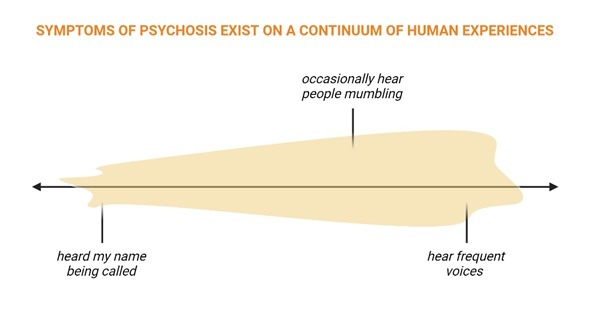
Even though we call them “unusual,” these experiences are actually more common than you might expect. Approximately 5-15% of people will have unusual experiences.
How common are so-called ‘unusual experiences’?
If you are having ‘unusual’ experiences you’re not alone – they’re more common than you think (we can them ‘unusual’ because not everyone has them).
Around 1 in 10 people will have these experiences at different points in their life, without feeling upset or worried about them.
This shows that these experiences can be a normal part of being human, and don’t always mean there is a mental health problem. But, if it persists or significantly impacts your daily life then they could suggest a mental health difficulty.
Anyone can have them, people of any age, culture, ethnicity, or background.
When do ‘unusual experiences’ typically occur?
“Unusual” experiences often begin in the teenage years, but they can also start in childhood or later in life.
Some people only have one type of experience, while others might notice multiple at the same time (like seeing and feeling things or hearing and seeing things).
For some, it’s a one-off event, while for others, the experiences continue.
People react in different ways to these experiences. Some find them interesting or even positive, while others may find them scary or upsetting.
These experiences can also appear, or feel stronger, during times of stress.
Why do they happen?
Some young people are more likely to have “unusual experiences” than others. This can be linked to many different things such as stress, difficult life events, not getting enough sleep, using substances, family history, or what’s happening around them.
What can you do about them?
The good news is that there are ways to cope. Simple strategies can make these experiences easier to manage and can also help with related problems like sleep.
For more information check out our coping with unusual experiences page.