
This section tells you what we mean by “unusual experiences” (UEs), what they are and how to manage them.
Introduction
Growing up and moving through your teenage years and early adulthood is a time filled with lots of changes – not just in your body, but also in your mind and how you connect with others.
During this period, some young people might have what seem like ‘unusual’ experiences.
- This could be hearing noises or voices, seeing things others can’t, or feeling like someone is watching, spying, or wanting to harm us.
- Often, these things come and go, and aren’t a big cause for concern.
- But for some, these experiences might persist and be what is known as an ‘at-risk mental state’ (ARMS) for psychosis. Most young people who are potentially ‘at-risk’ never develop psychosis.
- Only about 1 in 4 people with ARMS develop more severe symptoms, which can include those of a psychotic disorder. Although symptoms can be scary, keep in mind that even if psychosis does develop, it is treatable and most people with this condition can have a fulfilling and productive life (see also https://www.hearing-voices.org/about-voices/famous-people/ for a list of famous people who hear voices).
The Oxfordshire Prevention & Early DetectioN (OPEN) service is here for people who are experiencing ARMS. Our goal is to work with you in easing your current symptoms and the challenges they bring. By offering support, our aim is to help lower the risk of developing more serious issues down the road, including psychosis.
What are unusual experiences?
By ‘unusual experiences’ we mean disturbances in thoughts, feelings, and perceptions that can be puzzling and distressing.
You might have unusual sensory experiences, such as seeing or hearing things that others can’t, or be preoccupied with new or strange ideas. You might also feel suspicious or worried about your safety. Additionally, you might withdraw from friends and family or struggle with daily activities due to your feelings. Although we’re calling them ‘unusual’, these experiences are not as uncommon as you might think.
How common are so-called ‘unusual experiences’?
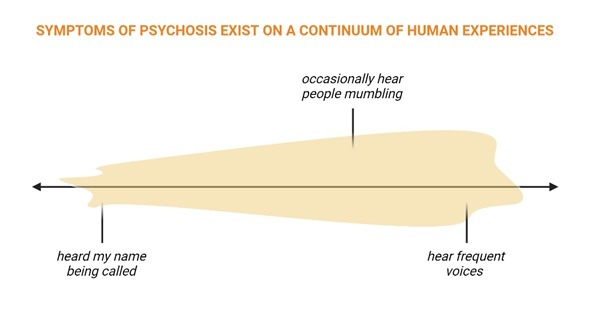
If you are having ‘unusual’ experiences you’re not alone – they’re actually more common than you might think (we can them ‘unusual’ because…). About 1 in 10 people will go through unusual experiences at different points in their life, without feeling bothered or distressed.
This suggests these experiences are a regular part of being human and don’t necessarily indicate a mental health problem.
Anyone can e.g. hear voices regardless of age, culture, ethnicity or background.
When do ‘unusual experiences’ typically occur?
‘Unusual’ experiences often start in adolescence but, can also begin during childhood or later in adulthood.
Some individuals may have just one type of experience, while others might have experiences in multiple sensory domains at the same time.
Similarly, some people may have one-off experiences, while others may have ongoing unusual experiences.
How people perceive these experiences varies widely – some find them interesting or pleasant, while others may find them frightening or distressing.
For many individuals, unusual experiences may begin or intensify during periods of stress.
Why do they happen?
Some young people are more likely to experience these kinds of ‘unusual experiences’ than others. This is due to a combination of factors, including stress, difficult life events, lack of sleep, substance use, genetics and their environment.
What can you do about them?
The good news is that there are strategies that help in coping with unusual experiences and related issues such as sleep problems.